 11
Published: November 14, 2026
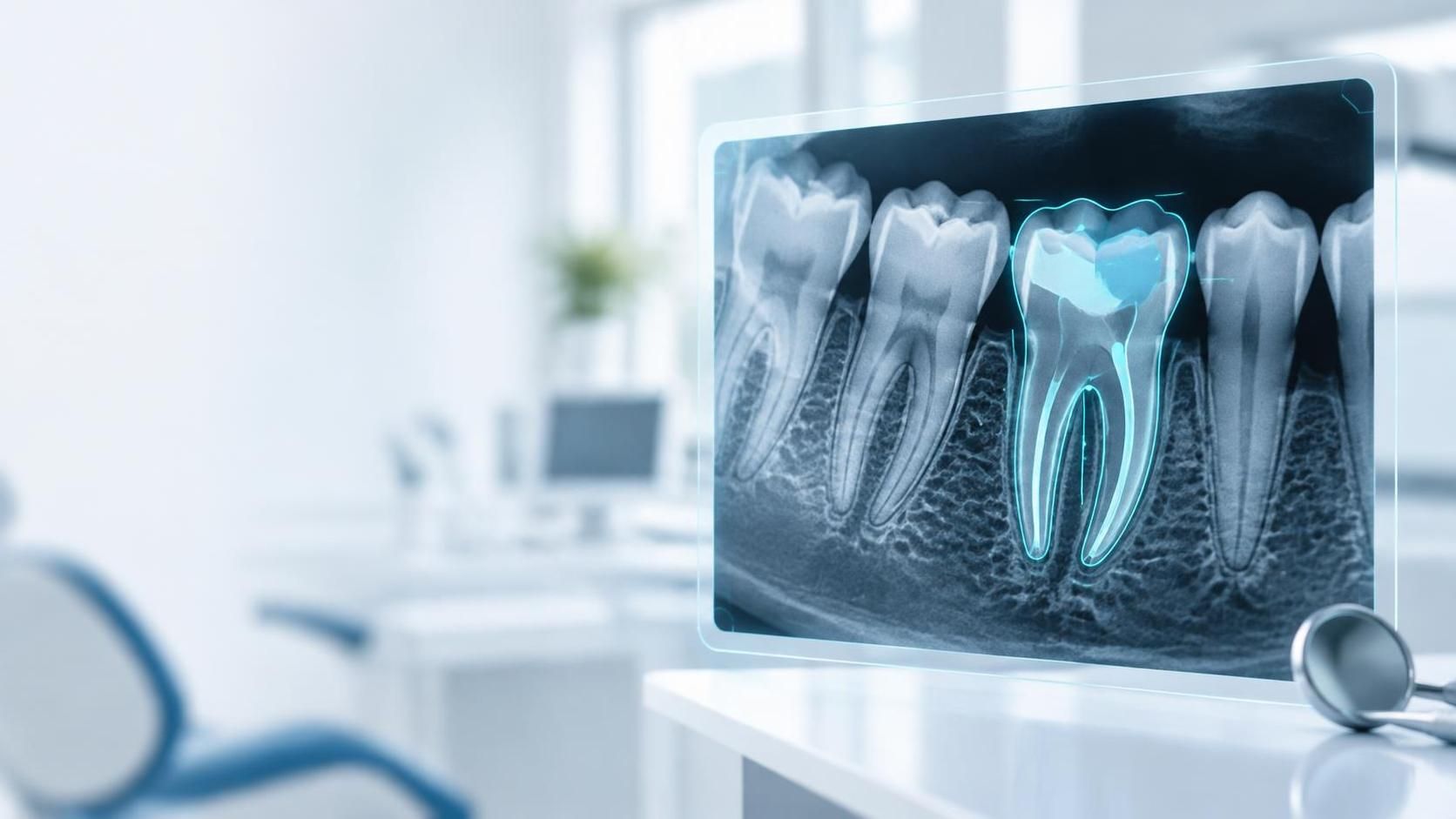
Pearl is a Los Angeles company that makes AI software for dentists. Its main product, Second Opinion, looks at dental X-rays and highlights possible problems such as cavities, so a dentist can review them. The FDA cleared it in 2022, and Pearl has since extended it to panoramic X-rays and 3D scans. It is a decision-support tool, not a replacement for your dentist’s diagnosis.
According to MassDevice’s report on the 2022 clearance, Second Opinion applies computer vision to identify and highlight key findings in patient X-rays, and can help dentists spot a broad range of common conditions. Dental trade coverage lists the findings it is designed to flag as dental caries (cavities), margin discrepancies, calculus, periapical radiolucency, crowns, fillings, root canals, bridges and implants.
In the chair, that usually means the dentist sees the X-ray with AI overlays marking areas to look at. This can also help patients, because the dentist can point to a highlighted spot while explaining what they see.
Pearl’s own press release, republished by DentistryIQ, says Second Opinion exceeded the FDA’s efficacy requirements across four clinical studies. Each used more than 2,000 images and 86 expert dentists and dental radiologists, and readers using the software identified 36% more lesions than readers without it.
That result comes from the company and was tied to its FDA submission. It shows that AI assistance helped readers find more lesions in a study setting. It does not mean the software is always right, and finding more flagged areas can also mean more follow-up questions for the dentist to judge.
Pearl also describes itself as having regulatory clearance in 120 countries, which is a company claim worth treating as marketing unless you check the specific country’s regulator. Dental groups including Coast Dental and DECA Dental Group have been announced as Pearl partners in company press releases.
Dentistry is one of the first places many people meet medical AI directly, because X-rays are routine. If tools like this prove reliable in real clinics, they could make detection more consistent between practices. The open questions are cost, how much clinicians rely on the software, and how well results hold up outside controlled studies. Business software is changing in similar ways, as in our explainer on the Lightspeed Insight Agent, and you can follow more stories in AI & Innovation.
This article is for general information and is not medical or dental advice. Talk to your dentist about your own care.